Skip to content
CIFAR header logo
fr
menu_mobile_logo_alt
  • Our Impact
    • Why CIFAR?
    • Impact Clusters
    • News
    • CIFAR Strategy
    • Nurturing a Resilient Earth
    • AI Impact
    • Donor Impact
    • CIFAR 40
  • Events
  • Programs
    • Research Programs
    • Pan-Canadian AI Strategy
    • Next Generation Initiatives
    • CIFAR Arrell Future of Food Initiative
  • People
    • Fellows & Advisors
    • CIFAR Azrieli Global Scholars
    • Canada CIFAR AI Chairs
    • AI Strategy Leadership
    • Leadership
    • Staff Directory
  • Support Us
  • About
    • Our Story
    • Awards
    • Partnerships
    • Publications & Reports
    • Careers
    • Equity, Diversity & Inclusion
    • Statement on Institutional Neutrality
    • Research Security
  • fr
Uncategorized

Earth 4D – Subsurface Science and Exploration

By: CIFAR
11 Dec, 2018

December 11, 2018
Earth4D

How do we understand the life and environment lying deep below the surface?

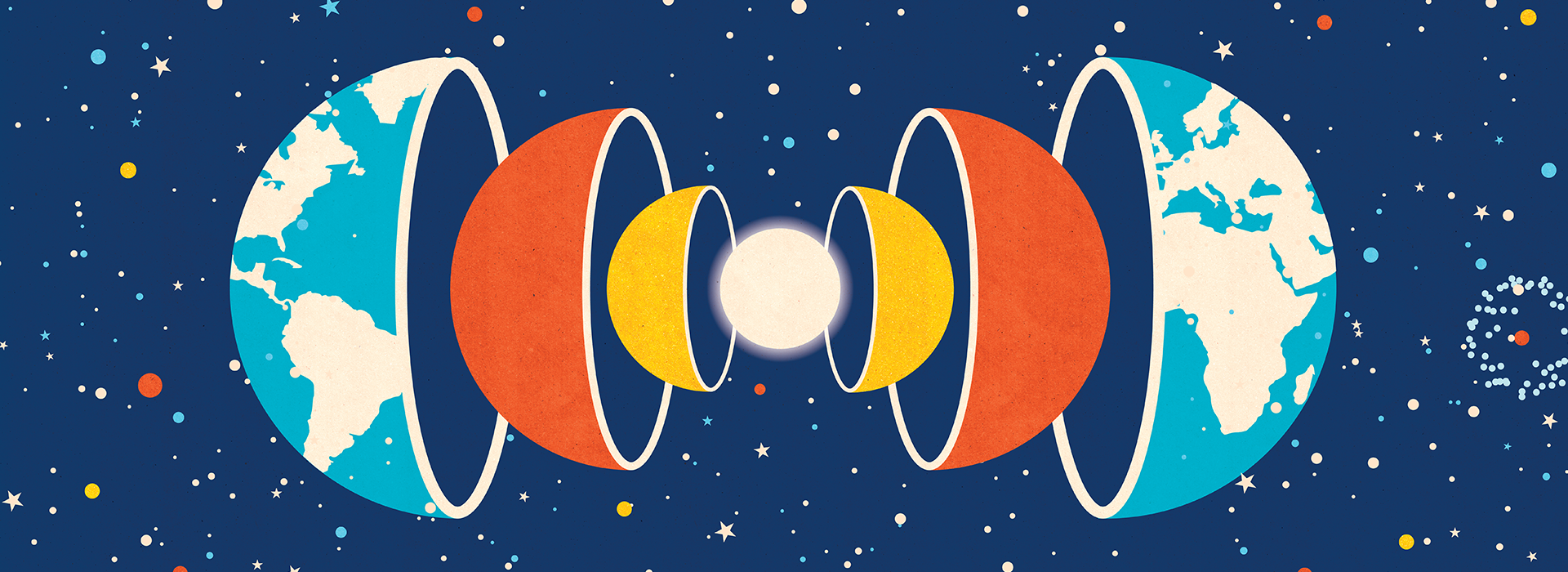
When we think about the Earth we tend to think only about the surface. But below the surface are vast stores of water, and in that water teams microbial, fungal and viral life. Studying this subsurface realm could give us access to new water supplies, and also teach us about life on our own planet and other planets as well.

Earth 4D – Subsurface Science and Exploration will examine the nature of the earth’s subsurface, from groundwater to the evolution of life on this planet and other ones. Shifting plate tectonics have made it difficult for researchers to learn about the history of Earth’s subsurface activity. But Mars has experienced no such impediment. Its historical experience holds the potential to inform us about Earth’s terrestrial evolution.

The program’s name refers to its ambitious objective – to explore the Earth not only in relation to water, space and land, but timescale as well. This team proposes a global view of these processes, rather than examining the Earth through a single aquifer, mine or sedimentary basin.

Applicants

  • Barbara Sherwood Lollar is a professor of Earth Sciences at the University of Toronto.
  • John Mustard is a professor of Earth, Environmental and Planetary Studies at Brown University.
  • Follow Us

Related Articles

  • CIFAR welcomes new and renewed Canada CIFAR AI Chairs
    December 04, 2025
  • Building safer AI with advanced evaluation methods
    December 03, 2025
  • Jacobs CIFAR Research Fellowship supports next-gen research on childhood development and learning
    November 24, 2025
  • CIFAR launches new AI safety Networks to address synthetic evidence in the legal system and linguistic inequality
    November 19, 2025

Support Us

The Canadian Institute for Advanced Research (CIFAR) is a globally influential research organization proudly based in Canada. We mobilize the world’s most brilliant people across disciplines and at all career stages to advance transformative knowledge and solve humanity’s biggest problems, together. We are supported by the governments of Canada, Alberta and Québec, as well as Canadian and international foundations, individuals, corporations and partner organizations.

Donate Now
CIFAR header logo

MaRS Centre, West Tower
661 University Ave., Suite 505
Toronto, ON M5G 1M1 Canada

Contact Us
Media
Careers
Accessibility Policies
Supporters
Financial Reports
Subscribe

  • © Copyright 2025 CIFAR. All Rights Reserved.
  • Charitable Registration Number: 11921 9251 RR0001
  • Terms of Use
  • Privacy
  • Sitemap

Subscribe

Stay up to date on news & ideas from CIFAR.

This website stores cookies on your computer. These cookies are used to collect information about how you interact with our website and allow us to remember you. We use this information in order to improve and customize your browsing experience and for analytics and metrics about our visitors both on this website and other media. To find out more about the cookies we use, see our Privacy Policy.
Accept Learn more