
Skip to content
CIFAR header logo
fr
menu_mobile_logo_alt
  • Our Impact
    • Why CIFAR?
    • Impact Clusters
    • News
    • CIFAR Strategy
    • Nurturing a Resilient Earth
    • AI Impact
    • Donor Impact
    • CIFAR 40
  • Events
  • Programs
    • Research Programs
    • Pan-Canadian AI Strategy
    • Next Generation Initiatives
    • CIFAR Arrell Future of Food Initiative
  • People
    • Fellows & Advisors
    • CIFAR Azrieli Global Scholars
    • Canada CIFAR AI Chairs
    • AI Strategy Leadership
    • Leadership
    • Staff Directory
  • Support Us
  • About
    • Our Story
    • Awards
    • Partnerships
    • Publications & Reports
    • Careers
    • Equity, Diversity & Inclusion
    • Statement on Institutional Neutrality
    • Research Security
  • fr

Follow Us

  • Home
  • ai
  • AICan: The impact of the Pan-Canadian AI Strategy

Canadian AI.
For Everyone.

Artificial intelligence is improving the lives of Canadians. From finding life-saving medications to creating better diagnostic tools for our health care system, Canada’s world-leading researchers are tackling some of our biggest challenges. This ground-breaking work also fuels a stronger, more innovative economy — creating high-value jobs and securing Canada’s place on the world stage.

The World’s First National AI Strategy

Canada is a global AI leader, powered by decades of investment in world-class research and a deep talent pool. Our strength is rooted in our ability to cultivate and attract top-tier AI talent.

In 2017, the Government of Canada appointed CIFAR to establish the world’s first national AI strategy, leading the effort to recruit and retain top researchers and emerging leaders to ensure long-term excellence and innovation. The strategy led to the establishment of three globally-recognized national AI institutes: Amii in Edmonton, Mila in Montreal and Vector Institute in Toronto.

Since then, the strategy has attracted more than 130 of the best researchers in the world through its Canada CIFAR AI Chairs program to form a powerful network to drive innovation from coast to coast, and ensure the benefits of AI are shared by Canadians.

Canada's National AI Strategy

Our AI Impact

CIFAR’s AI researchers are conducting research that is having a direct positive impact on Canadians and the economy.

AI for Health

Energy & the Environment

Making Technology Safer & More Responsible

Canada’s Global AI Ranking
Canada’s AI Trailblazers

AI for Health

previews-reach-1200x675

Novel networks: identifying responsible AI solutions in healthcare.

previews-parvin-1200x675

Using AI-powered approaches to cancer treatment and detection

previews-ross-1200x675

Ross Mitchell, Amii: AI note-taking for doctors

previews-vector-1-1200x675

Unveiling Alzheimer’s: How speech and AI can help detect disease

previews-babies-1200x675

Language learning in LLMs and babies

previews--jian-1200x675

Finding new drugs with AI

previews-russ-1200x675

AI that makes precision medicine more precise

Show Transcript

- So we've been experimenting with this

in a hospital in the emergency department

in Red Deer, Alberta for over a year.

But anecdotally, over the past year or so,

the physicians there are seeing about a 20

to 25% increase in throughput,

which amounts to about
three more patients seen

per physician per shift.

Also, anecdotally, the
quality of the notes,

at least in some cases, has improved.

The support staff have
notice of the quality

of the notes is improved
for various physicians,

it's because they're using the scribe.

And probably more importantly,

the physician now is
focused on the patient.

They're not at a keyboard typing notes

as they're interviewing you.

And the patients appear to be happier

because they get eye
contact with the physician.

The physician isn't
looking at the computer.

So it's improved them as physicians,

improve their quality of
life, improve throughput,

and improve patient satisfaction.

So these are the things
we suspect this will do,

and that's what this study is about,

is to evaluate that in
a larger sample size.


AI scribe tool that could help doctors see more patients

Show Transcript

- My research can change
the way that we interact

with all the machines around us.

The way that we're seeing
AI support human interaction

with technology extends to

what you might consider the
entire internet of body things.

(cheery rock music)

Because of CIFAR, I'm
able to create new ideas

at the intersection of
wildly different fields,

each of these different subsets of AI.

We are building a whole new generation

of prosthetic technologies

and the AI methods that
support their use that's based

on being able to actually
directly anchor a robotic device

to the bones of the human body.

- I played the piano so hard

that I got tendonitis
in both of my wrists.

I was thinking to myself,
what about the people

who have permanent injuries or amputation?

That motivated me to create technology

that could help people.

- Prosthetic limbs are unique.

The window of information
flowing between the person

and the machine is so very,
very small that it's hard

for the person to convey what they want

to their prosthetic device.

Artificial intelligence and
machine learning methods

are helping to get the two
parties on the same page,

to have the person and the machine be able

to see the same thing and
work together collaboratively.

So the person isn't really thinking

about using their robotic limb.

They're thinking about living their lives.

I really love the collisions
that result because CIFAR

and because of the
Pan-Canadian AI Strategy.

I talk to colleagues I never
would talk to otherwise.

We're in a very unique
time where having a force

of gravity allows us to bring
the world of AI to Canada,

and also to allow that
critical mass of talent

to really be showcased to the world.

Right now, the very best
people in the world,

they're moving to Canada.

If we truly succeed in our
ambitious research goals,

we're going to change the way
we think about that internet

of body things, the way that
we relate to our technologies,

and the way that we are
able to use technology

to amplify all facets of our
life in a really positive

and synergistic way.


Creating intelligent prosthetics to improve the quality of life for people with amputations

Energy & the Environment

previews-graham-1200x675

Using AI to track insect biodiversity loss in real time

previews-marlos-1200x675

Using AI to make technology smarter and cleaner

previews-rolnick-1200x675

Protecting the world’s biodiversity with AI

previews-gennady-1200x675

AI that teaches itself to be faster and cleaner

Show Transcript


- [Martha] My research specialty
is reinforcement learning.

You can think of it as machine
learning for decision-making.

It's all about learning models from data

so that you can take
actions in the real world.

My lab is very focused on
developing algorithms in RL

that can be used in the real world,

and CIFAR's open-ended funding,

that really lets us pursue the work

that we think is important,

has been critical for that.

Our core is a startup using reinforcement

for industrial automation.

With the town of Drayton
Valley, we looked at optimizing

how much chemical is added

to their water in a pre-treatment
step to really dial in

that chemical level and save on costs,

but also make sure that the
water quality is meeting exactly

the needs that the operators want.

And our goal is to help
those facilities save money

and also just make the
world more sustainable

by using less energy, using
less chemical, and so on.

Imagine we could save 10%
across all of these facilities

that power our world,

and that could have a
huge impact for everyone.

If our processes are more optimized,

that better decision making
translates into wasting less.

So there are a lot of challenges
in applying reinforced

learning in the real world.

Anytime you have an autonomous system

that is actively taking
actions, you have to be

really careful about what
that system is going to do.

It's a system where you have guardrails

where it can be safely deployed

with operators and engineers.

My position as a Chair at CIFAR
has been immensely helpful

for my research agenda in general
because whenever you allow

research to be untethered to a project,

rather you just fund an
individual, I can fund my students

to work on what I think are
the most impactful projects.

For me it's been really exciting to see

that this is possible.

It's a pretty unique thing
that we are trying to do.


Using reinforcement learning to optimize water treatment

Show Transcript
We are here in the Barro Colado research
station in Panama to work on AI for
monitoring biodiversity. We are testing
our algorithms in identifying different
species of insects together with a suite
of entomologists working on automated
hardware systems for tracting and
photographing moths and other insects.
It's fantastic to be here here and to
see how our algorithms are working in
the wild, quite literally!

Using AI to monitor insects in a tropical rainforest

Making Technology Safer & More Responsible

previews-rabbany-1200x675

Using large language models to detect misinformation online

previews-foutse-1200x675

Making the world’s AI safer

previews-sheila-1200x675

Building safe AI for generations to come

previews-dci-1200x675

Data communities for Inclusion: Recentering technology in the knowledge and well-being of the collective

previews-vector-passenger-1200x675

Empowering air travelers: A chatbot for Canadian air passenger rights

Show Transcript

Ensuring fairness of AI

decision-making means that

the AI performance should not

make a difference regarding

different people populations.

So this requires us to think

about how to use diverse data

for AI model training

and how to remove the bias

during the AI model training,

or decision-making process.

In such a way, we try to

eliminate - there's a long way to go -

the performance difference

among populations.


Why you need diverse data when training AI

Show Transcript

There's a lot of concern about

the impact of AI on tasks, jobs,

work.

Historians have a lot

to say about.

This isn't the first time that

we have had a sort of panic

about automation. In the 60s,

there were all sorts of concerns

about automation.

The same sort of, you know,

people saying, oh,

this is going to be terrible

to people saying,

this is going to be terrific.

We're all going to have three

day work weeks and

so on like that.

There was a whole distribution

of answers and they map on

pretty well to the sort of

distribution that we're

seeing now.

So we've had this sort

of panic before.

I think historians of technology

can help us understand it.


What the past can teach us about labour-disrupting technologies

Canada’s Global AI Ranking

0th

in the world for highly-cited publications in the top 100 most-cited AI publications.1

0th

worldwide for AI R&D, according to Stanford’s Global AI Vibrancy ranking.2

0th

in the world for the creation of high-potential AI startups, with 481 new startups created.3

0rd

Canada CIFAR AI Chairs are among the highest impact AI research groups globally, behind only Google and Stanford for the number of highly-cited publications in the top 10%.4

0th

in the world in the Global Index on Responsible AI.5

Canada’s AI Trailblazers

Geoffrey Hinton

Geoffrey Hinton

Recipient of the 2024 Nobel Prize in Physics for “foundational discoveries and inventions that enable machine learning with artificial neural networks” and the 2018 Turing Award for conceptual and engineering breakthroughs. Hinton is also the world’s 2nd Most-Cited Scientist.

Learn More
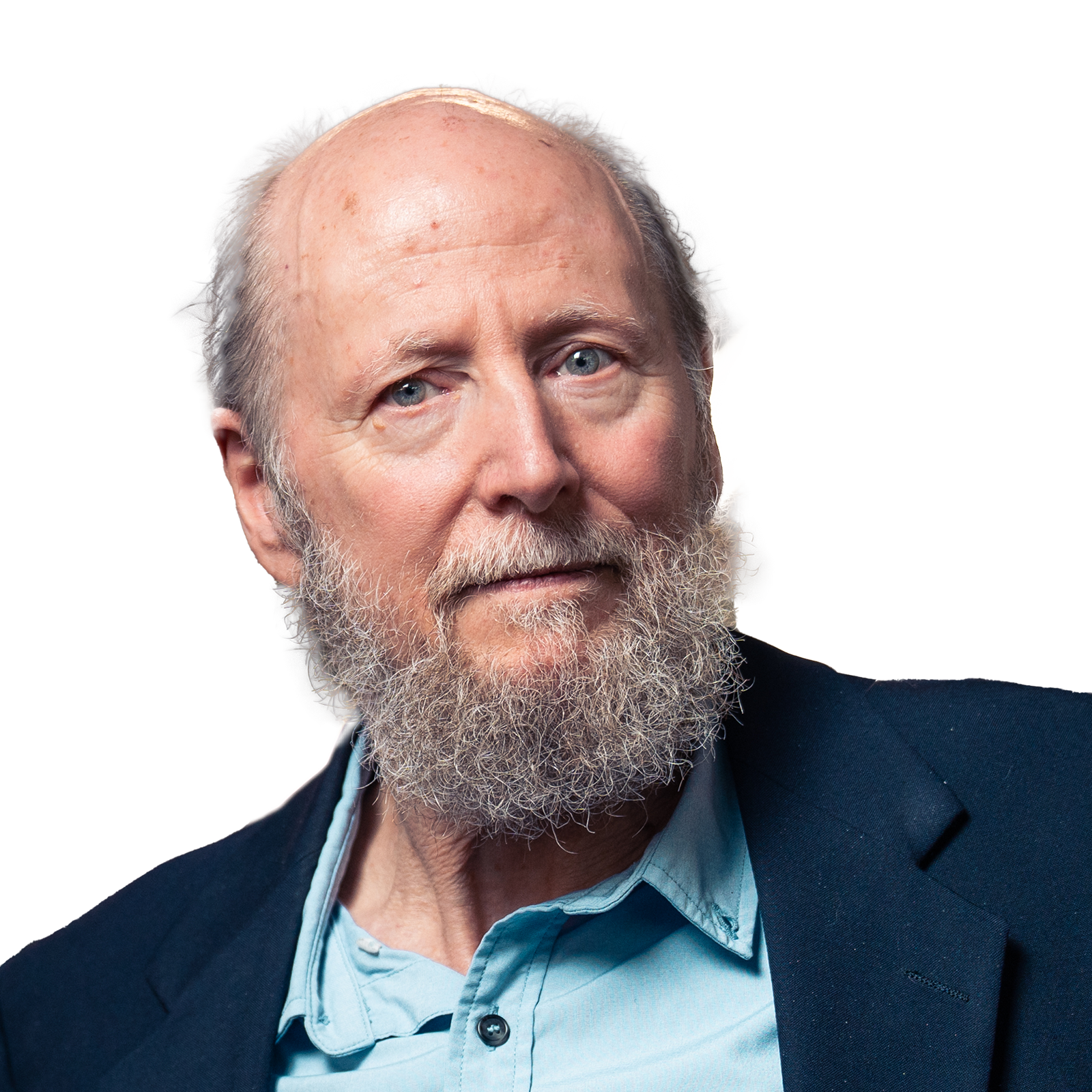
Yoshua Bengio

Yoshua Bengio

Recipient of the 2018 Turing Award for conceptual and engineering breakthroughs. Bengio is the World’s Most-Cited Scientist.
Learn More
Richard Sutton

Richard Sutton

Recipient of the 2024 Turing Award for developing the conceptual and algorithmic foundations of reinforcement learning.

Learn More

References

1 hai.stanford.edu/ai-index/2025-ai-index-report Fig. 1.11
2 hai.stanford.edu/ai-index/global-vibrancy-tool
3 hai.stanford.edu/research/ai-index-report Fig. 4.3.13
4 Measured by Average Relative Citation (ARC). Proprietary analysis conducted by Elsevier.
5 global-index.ai/Countries

Contact us

Have questions about the Pan-Canadian Artificial Intelligence Strategy?

Email us
Pan-Canadian Artificial Intelligence Strategy

Support Us

The Canadian Institute for Advanced Research (CIFAR) is a globally influential research organization proudly based in Canada. We mobilize the world’s most brilliant people across disciplines and at all career stages to advance transformative knowledge and solve humanity’s biggest problems, together. We are supported by the governments of Canada, Alberta and Québec, as well as Canadian and international foundations, individuals, corporations and partner organizations.

Donate Now
CIFAR header logo

MaRS Centre, West Tower
661 University Ave., Suite 505
Toronto, ON M5G 1M1 Canada

Contact Us
Media
Careers
Accessibility Policies
Supporters
Financial Reports
Subscribe

  • © Copyright 2025 CIFAR. All Rights Reserved.
  • Charitable Registration Number: 11921 9251 RR0001
  • Terms of Use
  • Privacy
  • Sitemap

Subscribe

Stay up to date on news & ideas from CIFAR.

This website stores cookies on your computer. These cookies are used to collect information about how you interact with our website and allow us to remember you. We use this information in order to improve and customize your browsing experience and for analytics and metrics about our visitors both on this website and other media. To find out more about the cookies we use, see our Privacy Policy.
Accept Learn more