By: Alison Rutka
13 Aug, 2025

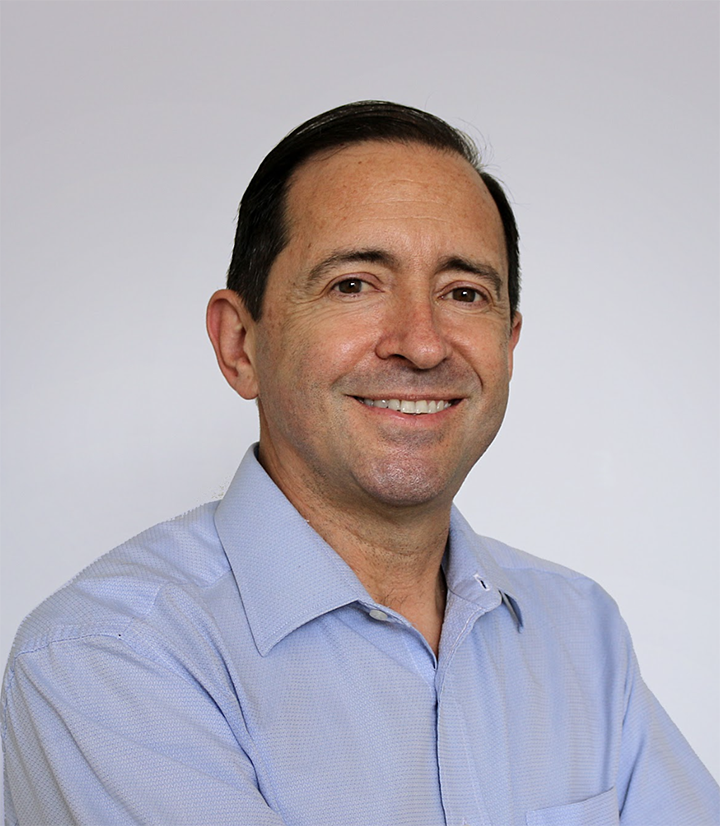 In a world where global food systems are failing and hundreds of millions remain undernourished or cannot get balanced, affordable and healthy diets, the future of food is a topic of urgent, global importance. Hugo Campos, the Deputy Director General for Science & Innovation at the International Potato Center based in Peru, offers his unique perspective on this critical issue. Having served as a panel member on CIFAR’s Future of Food Discovery Report, Campos provides a glimpse into the process of tackling this “wicked problem”. In a new Q&A, he delves into the Report’s key takeaways, the power of interdisciplinary collaboration and why caring about the future of food is fundamentally about caring for the future of humanity.
CIFAR: Can you set the stage for us? Why should people care about the future of food?
HUGO CAMPOS (HC): Food is civilization. Beyond nutrition, it shapes cultures, connects communities and creates a sense of belonging. Nobel laureate Lord Boyd Orr put it simply: “You can’t build peace on empty stomachs.” His words ring truer than ever today. Food insecurity fuels conflict, while equitable access to nourishment strengthens societies. Food defines who we are — it carries memories, traditions and shared experiences. If we care about humanity’s future — about justice, health and stability — then we must care deeply about the future of food.
CIFAR: You served as a member of CIFAR’s Future of Food Discovery Panel. What was your biggest takeaway from this process?
HC: Three key insights stood out. First, the power of convergence, bringing together renowned experts across disciplines transformed individual knowledge into collective breakthroughs on issues affecting all humanity. Second, efficiency of excellence: with a modest time and resource investment, CIFAR’s structured process delivered research questions and clear pathways forward, proving how smart collaboration multiplies impact. Lastly, I was struck by the value of constructive tension: while consensus was met, the most valuable moments came from candid exchanges of divergent views, which deepened our thinking and strengthened final outcomes.
Tackling complex global challenges requires both intellectual diversity, boldness and a framework for productive dialogue — exactly what CIFAR delivers.
CIFAR: The work of the Discovery Panel led to a new Report on the Future of Food, released this summer. What struck you most about the Report?
HC: The Report is buoyed by the power of its research questions. It bridges technology, science, finance and policy to create a multidisciplinary roadmap for real progress and underpin the way forward. It is also remarkably concise, distilling complex insights into fewer than 20 pages, demonstrating remarkable acuity without sacrificing depth. These qualities make the Report both visionary and actionable, a rare combination.
CIFAR: Future of Food was identified by CIFAR as one of the urgent issues in its foresight scanning, recognizing that it will continue to present a global challenge decades into the future. Why do you see this kind of foresight work as crucial?
HC: Global food systems can no longer be viewed through simplistic divides, where undernourishment and obesity are problems in less developed and wealthier countries, respectively. Despite recent progress, about 670 million people remain undernourished, over 15 times Canada’s entire population — a moral crisis of staggering proportions. The root cause? Failing food systems are unable to deliver nutritious, sustainable and affordable diets for all.
This wicked problem demands transformation across entire food systems, from production and processing to policy, finance, distribution, consumer behaviour and waste management. That’s why foresight is critical. CIFAR’s unique interdisciplinary approach doesn’t just track trends, it anticipates unseen challenges and opportunities. In this urgent crisis, comprehensive foresight may be our most powerful tool for meaningful change.
CIFAR: From your perspective, how do you envision the impact of this initiative moving forward?
HC: As a starting point, I recommend a two-tier approach: Design an impact cluster gathering top global minds, both Canadians and from elsewhere, to address critical gaps in the biological and social sciences and business aspects of food. Secondly, Action-Driven Dialogue: Leverage CIFAR’s convening power to transform scientific evidence into concrete policy solutions — from finance to social protection to private sector engagement. Combining cutting-edge science with practical implementation ensures that research translates into real-world impact.
With its bold approach and unwavering commitment to the best science available and challenging the status quo, CIFAR is uniquely positioned to lead efforts in redefining food systems, not just as a matter of nutrition, but as a cornerstone of human progress.
Building on the findings of the Future of Food Discovery Report, CIFAR will launch a Call for Discovery Workshops in September 2025 under the newly announced CIFAR Arrell Future of Food Initiative. Discovery Workshops aim to encourage and provide an opportunity for new, interdisciplinary and international research networks to collaborate in response to foundational questions identified in the Report.