
Safeguarding Courts from Synthetic AI Content
Can the justice system defend against the rising threat of AI-generated synthetic content in legal proceedings?
Maintaining the integrity of judicial processes is a cornerstone of democratic societies. The rapid evolution of generative AI technologies has introduced a severe and unaddressed safety risk: the potential for synthetic content to infiltrate our courts. The legal system, unlike other sectors, functions under stringent evidentiary rules where a single piece of falsified evidence can result in a wrongful conviction, undermine due process, and permanently damage public confidence.
A variety of systemic challenges make it difficult to counter this threat effectively. Courts, already facing significant caseloads, are not prepared to detect sophisticated synthetic media or to properly assess its authenticity and reliability. Tools created for general use are not precise enough or compatible with legal procedures. This creates a dangerous gap in procedural fairness, particularly for populations with limited resources, such as self-represented litigants, who may lack the means to identify fabricated materials.
Overcoming these obstacles requires a coordinated response from judges, legal professionals, and policymakers. Yet, progress is hindered by the absence of analytic tools built to accurately and transparently assess digital evidence within the unique procedural, evidentiary, and interpretive contours of legal practice.
This Solution Network is dedicated to the socially responsible design, validation, and deployment of a purpose-built AI-verification tool. Developed through close partnership with legal professionals, judicial officers, and other stakeholders, the goal is to create a solution that is not only technically robust but also procedurally sound. The system will be designed to support — not supplant — human judgment and to uphold the core principles of fairness and transparency.
List of Members:
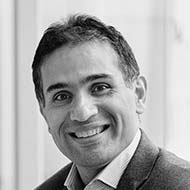
Ebrahim Bagheri
Solution Network Co-Director
Safeguarding Courts from Synthetic AI Content

Jacquelyn Burkell
Solution Network Member
Safeguarding Courts from Synthetic AI Content

Yuntian Deng
Solution Network Member
Safeguarding Courts from Synthetic AI Content

Karen Eltis
Solution Network Member
Safeguarding Courts from Synthetic AI Content

Maura R. Grossman
Solution Network Co-Director
Safeguarding Courts from Synthetic AI Content
University of Waterloo
Vector Institute

Mathias Lécuyer
Solution Network Member
Safeguarding Courts from Synthetic AI Content

Vered Shwartz
Canada CIFAR AI Chair
National Program Committee member
Solution Network Member
Pan-Canadian AI Strategy
Safeguarding Courts from Synthetic AI Content
Vector Institute