By: Justine Brooks
5 Mar, 2026

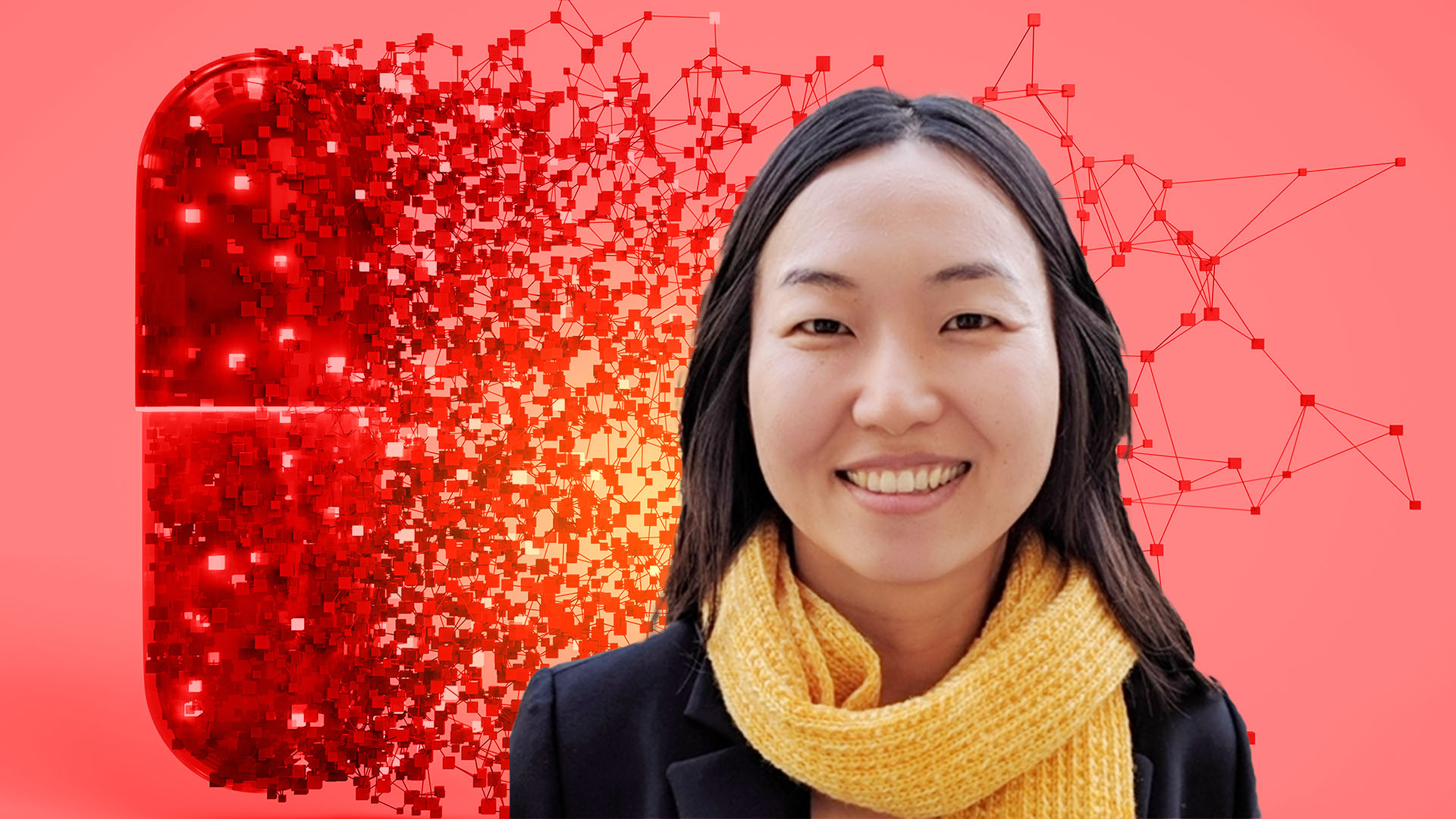
Ensuring data privacy while leveraging powerful AI models to improve healthcare is one of the most significant challenges in modern machine learning. Canada CIFAR AI Chair at Amii Mi Jung Park is addressing this by developing ways to safely use healthcare data to enhance patient care.
While sharing healthcare data at scale can reduce costs, increase efficiency and enable data-driven optimization, the methods used to protect data are often flawed. Park is leveraging differential privacy, a technique that enables data collection while protecting individuals’ privacy.
“Balancing privacy and utility in healthcare is a very challenging task, and I don’t think there is a one-size-fits-all kind of solution,” says Park, an assistant professor in the department of computer science at the University of British Columbia.
Park explains that traditional methods of removing direct identifiers like names and addresses put patients at risk of reidentification attacks, a process that reverses the anonymization of a dataset by revealing the identities and personal information of individuals.
Differential privacy mechanisms add calibrated noise to the training data, reducing the risk of identifying personal information. Other methods, such as storing patient data locally within hospital systems or restricting who can access data, for what purposes, and under which health compliance frameworks, are also viable options. “In some cases, using all of the above simultaneously could be sensible,” she says.
By securing this data, researchers can develop better diagnostic tools to identify disease patterns and risk factors earlier. Park explains that, “This can also improve equity, enabling more targeted interventions for underrepresented groups.”
Beyond healthcare, Park is addressing the critical threat of AI-driven synthetic data misuse. She is specifically investigating diffusion-based models, which generate realistic text and images, some of which can lead to harmful and privacy-violating content.
Park’s recent CIFAR AI Safety Catalyst Project, funded through the CAISI Research Program at CIFAR, proposes modifying data generation processes to prevent harm without the need to costly retrain entire foundation models. This work, led by Park’s postdoctoral student, Mingyu Kim, with funding from the Catalyst Project, has been published at NeurIPS 2025 and will be presented at the International Conference on Learning Representations (ICLR) later this year. They are currently working on extending their research to include text diffusion models, where safety risks are underexplored and existing approaches have proven inadequate.
Park credits the Canada CIFAR AI Chair program with enriching her research experience in Canada by providing her with funding that standard grants might not cover. “The program also strengthened my ability to attract and retain top-tier international students and postdocs by offering a strong research environment connected to the broader CIFAR ecosystem.”
Park sees the program as a key aspect of the Canadian AI ecosystem, retaining leading researchers in Canada, encouraging collaboration across the three National AI Institutes and signalling long-term commitment to AI leaders. “I am glad I chose to come to Canada.”