By: Abeer Khan & Justine Brooks
11 Feb, 2026


On the International Day of Women & Girls in Science, we celebrate the incredible innovators, researchers and trailblazers in CIFAR’s research community who are steering bold new directions of inquiry. We spoke with Debra Karhson, Angelica Lim, Freda Shi and Mei Zhen, who are doing more than just building knowledge — they’re reframing our futures and shaping the next leaps in science.
In a series of short Q&As, they discuss their research, what sparked their interest in their fields and share advice for women pursuing careers in science.

CIFAR Azrieli Global Scholar 2025-2027, Boundaries Membership & Belonging
Debra Karhson studies social connectedness — one of the most protective factors against suicide and suicidal behaviour, which requires a deep, fundamental understanding. Her research centres on defining the brain biology of social connectedness and the role of endocannabinoids — signalling molecules that regulate essential functions like mood, sleep, appetite, pain and immune responses — in the transition of social interactions into social connection. Her goal is to improve quality of life by identifying the brain mechanisms underlying social connection and leveraging them to expand human capacity for belongingness.
Q: What sparked your interest in your field?
A: For me, biomedical engineering as a major was everything I wanted in a career; it was the perfect blend between the inventing, tinkering and tweaking found in engineering with the exploration of the natural world. Then, during university, through my co-op rotations in neuroscience labs at Baylor College of Medicine, I discovered that neuroscience was a field of study. It was like a light had been turned on and I finally found the area of science that could help me answer my most burning questions about autism and the brain.
Q: What real-world applications might emerge from identifying the brain mechanisms behind social connection?
A: My goal is to help identify intervention points for those most at risk for suicide and suicidal ideation, particularly for groups that are at increased risk, like those who are neurodivergent. Approximately 90 to 95 per cent of people who die by suicide are affected by at least one neuropsychiatric disorder (e.g., autism spectrum disorder). By studying the brain mechanisms for social connections, we aim to identify novel intervention points and new inroads for therapies to increase social connectedness.
Q: What’s one piece of advice you’d give to young women and girls looking to build a career in STEM?
A: Keep showing up. After every win and failure. In the face of haters and to the applause of your supporters. It will be hard and not every day is fun, but there isn’t a day I wish I could be anything else. I live for my daughter, who reminds me that I’m just like the scientists in her books, because there used to be days I didn’t think I would actually get to be a scientist running my own lab, chasing my own research queries, tending to my little piece of the science landscape. You are tenacious and brave, you are capable and you just need to keep showing up. You don’t have to be the best; I wasn’t. I was, however, incredibly tenacious.
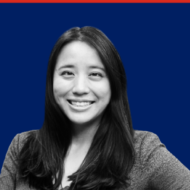
Canada CIFAR AI Chair, Amii; Associate Professor, Simon Fraser University
Angelica Lim is building emotionally intelligent and empathetic robots, pushing the boundaries of how machines might interact and integrate into human life. Rather than humans adapting to robots, Lim imagines a future in which robots can understand how humans communicate, through gesture, tone, body language and more. Her research addresses not only how robots can change the way we work, but also how we live.
Q: What sparked your interest in your field?
A: I grew up in Southern California, near Disneyland, and was inspired by the animatronic characters the company brought to life. Later in my computer science degree, I had the chance to compete in robotics competitions, and I loved that we needed to work in teams to make the robot work.
Q: Where do you see robotics having the greatest impact for the general public?
A: Robotics has the potential to do things that we cannot do as humans. This requires some imagination — we of course think about the household robot doing chores because they are repetitive and we would prefer not to do them. But the greatest impact will come from achieving things that humans cannot yet do, such as working 24/7 in space, in dangerous areas on Earth, such as underwater or in radioactive zones. Social robots are already being trialled during radioactive cancer treatment, which can be a lonely and scary process for kids as parents cannot accompany them into the room.
Q: What lasting impact do you hope your work will have on the field of robotics?
A: I hope to bring a focus on emotion and humanity that is relatively rare in robotics in North America. Our mood, feelings and emotions hold an important place in our lives, and I hope to inspire others to explore a space for robotics that acknowledges that human life is more than just about work.
Q: What’s one piece of advice you’d give to young women and girls looking to build a career in STEM?
A: Explore research opportunities. It’s not only about getting a job in a company when you graduate — talk to professors and see what you can do at the cutting edge of research.

Canada CIFAR AI Chair, Vector Institute; Assistant Professor, University of Waterloo
Natural language processing — the field of AI that powers chatbots — was built on ideas about how humans learn language. Freda Shi’s work now seeks to understand how uncovering the complex mechanisms behind powerful AI systems may, in turn, lead to a deeper understanding of how humans process language and provide clarity on the workings of AI systems in general.
Q: What sparked your interest in your field?
A: My interest in natural language processing (NLP) was initially sparked by Ray Monk’s biography of Ludwig Wittgenstein. I became fascinated by the idea that “the meaning of a word is its use in the language” (Wittgenstein, 1953). This principle is one of the cornerstones of distributional semantics, which most modern NLP models are built on. These models represent words and sentences as vectors, assuming that meaning is fundamentally derived from context. This work offers me a perfect bridge between the frontier of technology and philosophical ideas.
Q: How does understanding the mechanisms of human language processing help advance AI?
A: Actually, I’d say the influence is now flowing more in the opposite direction. Moving forward, I believe that understanding how AI works will help us draw meaningful hypotheses to reverse-engineer the mechanisms of human language. That said, mimicking human behaviours has led to great breakthroughs in the past. Recurrent neural networks are built on the idea that our brains process language sequentially. This architecture defined the NLP landscape for years, right up until transformers took center stage.
Q: What is the biggest impact you hope your work will have for the field?
A: I now dedicate much of my work to understanding the mechanics of powerful AI systems, and I believe the contributions will be twofold: first, to demystify these “AI opaque boxes” and help the general public understand what AI is or is not; and second, to use AI interpretability results to generate novel hypotheses about human language processing. For the latter, I particularly look forward to collaborating with neuroscientists to explore these intersections further.
Q: What’s one piece of advice you’d give to young women and girls looking to build a career in STEM?
Be creative and be brave. Do not hesitate to ask for help fromothers when you need them!

Fellow, CIFAR MacMillan Multiscale Human
Our senses, movements and thoughts take shape through trillions of tiny connections between neurons. Mei Zhen is uncovering how these synapses form — and how they wire our nervous system to build our brains. Her lab combines computational biology, electron microscopy, genetics, optogenetics, calcium imaging and electrophysiology to address how the mouse nervous system develops and operates. Zhen’s research aims to identify circuit deficits underlying human neurological disorders so we can better address and treat damaged or diseased brains.
Q: What sparked your interest in your field?
A: Actually, I did not immediately know I wanted to go into neurobiology. Before I went to college, I read books about or written by Rachel Carlson and Jane Goodall, which left a lasting impression on me. I would say that unknowingly, those books led me to where I am now. Through their lenses, I saw how we are just one part of a complex web of life, cohabitating and co-evolving. When I went to college, I decided to study in areas that would help me understand how life develops and evolves. It was Darwin’s series of writings, especially his theories on the form and inherent nature of behaviour, from animal to man, that gave me a burning desire to explore how we function.
Q: How could your work on synapse formation transform how we understand brain development and brain disorders?
A: I started by identifying a few genes that severely affect the development of the synapse type I used as a model. Soon, I (and others) found that these genes have different effects on different types of synapses, in different animals. This became a puzzle to me. After 20 years, looking at synapse formation in the context of a dynamically connected cellular network, and an individual gene in the context of a dynamically interacting molecular network, I found fascinating answers to this long-standing puzzle. I think this conceptual framework will be the most important contribution to the field of brain development and disorders. I hope that my work inspires a desire to better understand ourselves and appreciate our lives and those around us. Without this, our quality of life as humans will not improve.
Q: What’s one piece of advice you’d give to young women and girls looking to build a career in STEM?
A: Read books, think for yourself and seek out opportunities to work with mentors.