Skip to content
CIFAR header logo
fr
menu_mobile_logo_alt
  • Our Impact
    • Why CIFAR?
    • Impact Clusters
    • News
    • CIFAR Strategy
    • Nurturing a Resilient Earth
    • AI Impact
    • Donor Impact
    • CIFAR 40
  • Events
  • Programs
    • Research Programs
    • Pan-Canadian AI Strategy
    • Next Generation Initiatives
    • CIFAR Arrell Future of Food Initiative
  • People
    • Fellows & Advisors
    • CIFAR Global Scholars
    • Canada CIFAR AI Chairs
    • AI Strategy Leadership
    • Leadership
    • Staff Directory
  • Support Us
  • About
    • Our Story
    • Awards
    • Partnerships
    • Publications & Reports
    • Careers
    • Equity, Diversity & Inclusion
    • Statement on Institutional Neutrality
    • Research Security
  • fr
Advances

CIFAR report charts bold research directions for the future of the Arctic

By: Alison Rutka
2 Jun, 2026

June 2, 2026
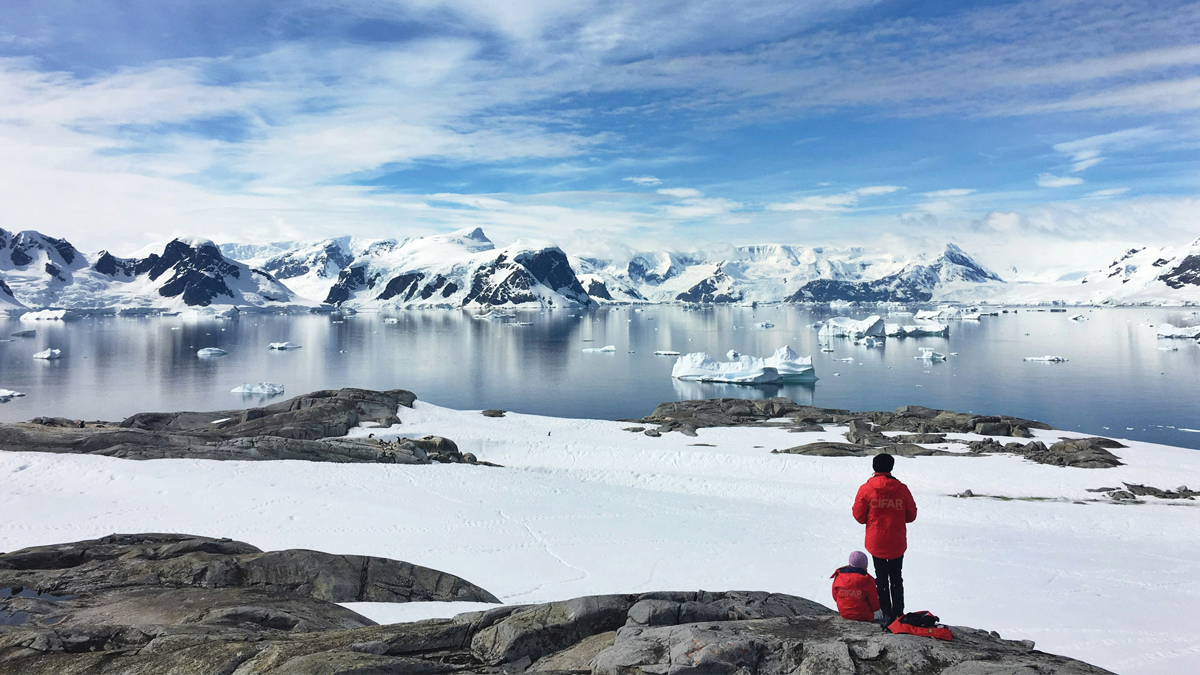
Two people in red jackets on a snowy, rocky terrain overlook a serene Arctic landscape with icy waters and snow-capped mountains under a blue, cloudy sky.

Drawing on diverse disciplines and ways of knowing, CIFAR panel proposes new approaches to understanding the Arctic’s future


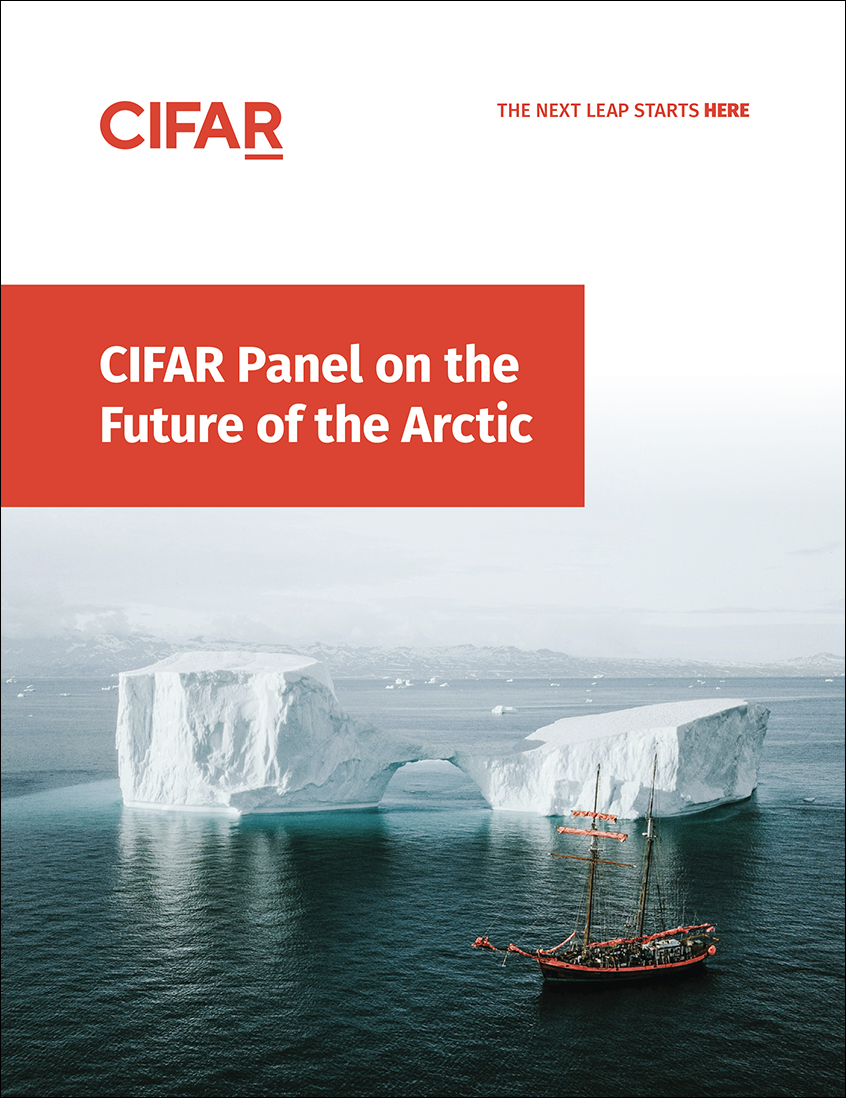
A new report released today by CIFAR offers a provocative roadmap for the next 20 years of Arctic inquiry, challenging scholars to move toward a model of responsible, relational operation within one of the world’s most rapidly changing regions.

The CIFAR Panel on the Future of the Arctic Report is the culmination of an interdisciplinary effort to identify research pathways that can support environmental, economic and socio-cultural prosperity. The report emphasizes that the region’s future lies in transdisciplinary partnerships that bridge research and the lived experiences of those who call the Arctic home.

A Multi-Lens Exploration

The findings emerged from the CIFAR Discovery Panel, hosted in Geneva in February 2026 in partnership with the Swiss National Science Foundation and made possible through the CIFAR Ralph M. Barford Discovery Initiative. Through roundtable discussions and collaborative sessions, the forum brought together a highly diverse group of 14 international experts, ranging from backgrounds in oceanography and geology to Indigenous Arts and speculative fiction, including many early-career researchers. 

Top 3 High-Level Research Findings

The report identifies three transformative research themes designed to shift existing scientific and social paradigms:

  • Mobility as Place: This theme challenges static, colonial definitions of geography by framing the Arctic as a dynamic field of movement. It recognizes that shifting ice, migrating species and ocean currents are not just “changes” to a place, but are the very elements that define it.
  • Arctic ‘Kinfrastructures’: Drawing on Indigenous epistemologies, this concept proposes applying human relationality — specifically kinship — to the region’s infrastructure. It asks how governance and development might change if a mine, a bridge or the permafrost itself were treated as kin deserving of care and reciprocity.
  • Knowledge Integration Modelling: The panel calls for a “holistic modelling paradigm” that integrates environmental and socio-economic data to better inform governance and identify critical vulnerabilities and tipping points. This “digital twin” approach aims to provide Arctic nations with a stronger evidence base for international climate negotiations.

Looking Ahead

CIFAR’s commitment to foresight work ensures that the global community remains prepared for the complex challenges of tomorrow by proactively identifying emerging frontiers.

 “The transformative ideas presented in this report are a testament to the power of bringing together diverse, global minds,” says Kate Geddie, Executive Director of Research at CIFAR. “The work of this Panel helps us define a new, responsible path for research and collaboration in a region that is vital to the entire world.”

  • Follow Us

Related Articles

  • De-risking and de-mystifying large-scale AI
    May 19, 2026
  • Three longstanding CIFAR researchers recognized with the 2025 Nobel Prize in Economics
    October 15, 2025
  • Feeding Humanity: Insights from the Future of Food Report
    August 13, 2025
  • CIFAR Distinguished Fellow W. Ford Doolittle appointed Companion of the Order of Canada
    July 08, 2025

Support Us

The Canadian Institute for Advanced Research (CIFAR) is a globally influential research organization proudly based in Canada. We mobilize the world’s most brilliant people across disciplines and at all career stages to advance transformative knowledge and solve humanity’s biggest problems, together. We are supported by the governments of Canada, Alberta and Québec, as well as Canadian and international foundations, individuals, corporations and partner organizations.

Donate Now
CIFAR header logo

MaRS Centre, West Tower
661 University Ave., Suite 505
Toronto, ON M5G 1M1 Canada

Contact Us
Media
Careers
Accessibility Policies
Supporters
Financial Reports
Subscribe

  • © Copyright 2026 CIFAR. All Rights Reserved.
  • Charitable Registration Number: 11921 9251 RR0001
  • Terms of Use
  • Privacy
  • Sitemap

Subscribe

Stay up to date on news & ideas from CIFAR.

This website stores cookies on your computer. These cookies are used to collect information about how you interact with our website and allow us to remember you. We use this information in order to improve and customize your browsing experience and for analytics and metrics about our visitors both on this website and other media. To find out more about the cookies we use, see our Privacy Policy.
Accept Learn more