By: Justine Brooks
4 Dec, 2025

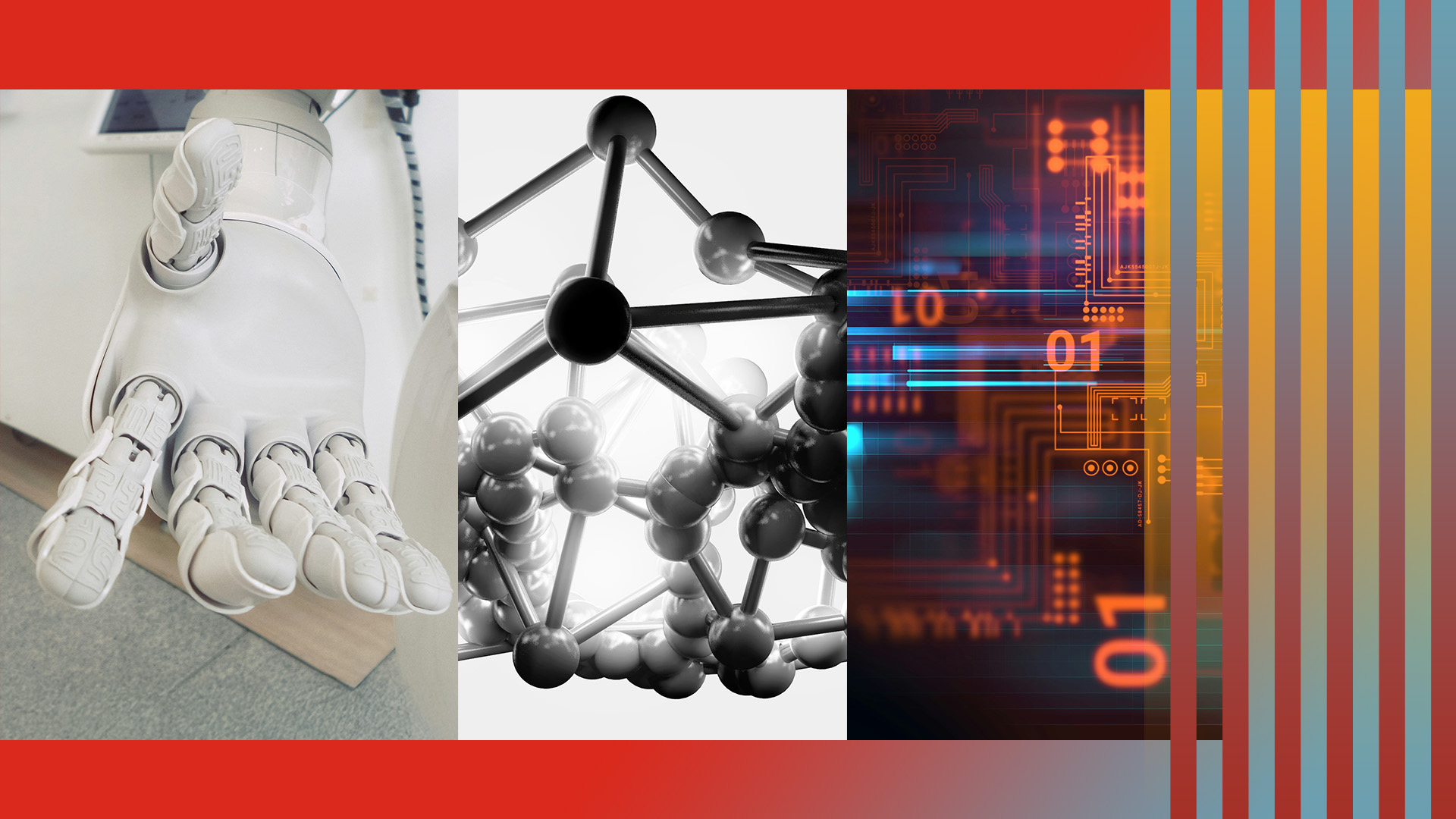
CIFAR is pleased to welcome eleven new and renewed world-leading AI researchers to the prestigious Canada CIFAR AI Chairs program. As the cornerstone of the Pan-Canadian AI Strategy, the Chairs program advances the fundamental science of AI, fosters innovative technologies that strengthen Canada’s economy and develops solutions to some of the greatest challenges globally.
Each Chair, affiliated with one of Canada’s three national AI institutes (Amii, Mila and Vector Institute), receives five years of dedicated funding to pursue transformative research ideas and train the next generation of innovators. The latest cohort of Canada CIFAR AI Chairs has a wide range of expertise, from fundamental AI research and robotics to AI applications in healthcare and materials discovery.
CIFAR congratulates the following new and renewed Canada CIFAR AI Chairs:
Amii
Mila
Vector
Ensuring that advanced AI technologies perform accurately, responsibly and efficiently is the focus of fundamental AI science. Marina Meila applies her background in statistics and optimization to achieve this, ensuring that the structure of complex data sets remain intact. Golnoosh Farnadi, who works on optimization, applies her knowledge of fairness, ethics and responsible AI to ensure that models are built and behave in a way that is consistent with human values. Complementing this work, Matt J. Kusner examines critical issues around privacy and regulation, addressing the rights and responsibilities for both the public and model developers.
One of AI’s most prominent applications in the real world is in robotics, creating physical agents that interact with the world around them. Angelica Lim and Mo Chen both work on human-robot interaction, exploring how robots could play a role in our everyday lives. Lim examines the emotional capabilities of human-like AI machines, while Chen applies his knowledge to the development of robotic systems like self-driving cars, unmanned aerial vehicles and household robots. Matthew E. Taylor takes a different approach, researching how intelligent agents, both physical and virtual, can interact with their environments, coordinate and reason about other agents and learn from humans.
AI is having a huge impact on how we treat a range of health issues and how our health systems operate. J. Quinn Lee and Guillaume Lajoie are exploring how AI can shape the field of neuroscience and how neuroscience in turn can shape the development of intelligent systems. This could have a wide range of applications from treating neurological disorders to developing neurotechnologies. Chris J. Maddison focuses on developing machine learning algorithms that can make intelligent predictions in complex environments, with a particular focus on applications in natural sciences and drug discovery. Guy Wolf takes a broader approach to health sciences, focusing on biomedical data analysis and representation. By presenting data in an approachable and interpretable way for domain experts, he makes it easier to collaborate across disciplines. J. Terence Blaskovits is also forging interdisciplinary connections, combining his expertise in AI and computational chemistry to discover new molecules and materials. His work aims to improve energy, optical and catalysis applications such as OLED lights and solar cells.