Programmes de recherche

NOTRE APPROCHE
Nous rassemblons de brillants cerveaux pour aborder les questions les plus importantes auxquelles font face la science et l’humanité.
Les programmes de recherche du CIFAR rassemblent des chercheurs interdisciplinaires d’envergure mondiale qui travaillent ensemble pendant cinq ans. Un directeur ou deux codirecteurs dirigent des programmes qui comptent chacun environ 20 à 40 membres et spécialistes-conseils du monde entier, ainsi que deux ou trois membres du programme de chercheurs mondiaux CIFAR-Azrieli qui ont un mandat de deux ans.
Les programmes de recherche du CIFAR produisent un impact au-delà du milieu universitaire grâce à une stratégie hautement collaborative. Les domaines visés par cet impact se dégagent de la programmation de recherche principale des programmes, et la stratégie repose sur un échange itératif et à long terme d’idées et de perspectives entre les membres des programmes et les parties prenantes non universitaires.
PÔLES D’IMPACT
Les programmes de recherche du CIFAR s’articulent autour de cinq pôles d’impact distincts qui traitent de grandes questions d’envergure mondiale et visent à favoriser un environnement propice à l’émergence de percées.
Chaque pôle jette un pont vers la riche communauté mondiale du CIFAR en anticipant les défis à venir et en encourageant les scientifiques de toutes les disciplines à œuvrer en collaboration pour un avenir audacieux et innovant. Les programmes de recherche peuvent s’articuler autour de plusieurs pôles en fonction de la nature et des objectifs de leurs travaux.
Programmes de recherche actuels

2014, 2020
Accélération de la décarbonisation
Pouvons-nous rétablir l’équilibre du bilan de carbone grâce à des idées audacieuses?
2004, 2008, 2014, 2019, 2025
Apprentissage automatique, apprentissage biologique
Comment approfondir notre compréhension de l’intelligence et construire des machines intelligentes?



2014, 2020
Cerveau, esprit et conscience
Quels sont les origines et les mécanismes de la conscience?
2003, 2007, 2012, 2019, 2025
Développement du cerveau et de l'enfant
Comment les expériences de l'enfance influencent-elles la santé tout au long de la vie?

2023
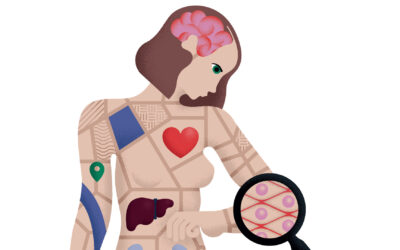
Être humain multiéchelle CIFAR-MacMillan
Est-il possible de créer une carte multiéchelle du corps humain?

2019
Frontières, groupes et appartenance
Est-il possible d’avoir un monde sans distinction entre « nous » et « eux »?

1987, 1992, 1997, 2002, 2007, 2012, 2019, 2025
Matériaux quantiques
Comment les technologies quantiques pourraient-elles transformer la société?
2014, 2020
Microbiome humain
Comment les microorganismes qui nous habitent influencent-ils la santé, le développement et même le comportement?

2019
Règne fongique : Menaces et possibilités
Que pourrions-nous découvrir dans une biosphère inconnue?
2019
Terre 4D : Science et exploration du sous-sol
Quels sont les modes d’interaction de la vie, de l’eau et de l’énergie entre les vastes environnements souterrains et de surface de la Terre?
Programmes qui arrivent en fin de mandate

1986, 1991, 1996, 2001, 2006, 2011, 2016, 2023
Extrême Univers et gravité
Quelle est la nature de la gravité extrême et comment l’élucidation de cette question pourrait-elle nous aider à comprendre l’origine et l’évolution de l’Univers?
2002, 2007, 2012, 2019
Informatique quantique
Comment exploiter la puissance de la mécanique quantique pour améliorer le traitement de l’information?
Programmes qui ont récemment pris fin

2014
Architecture moléculaire de la vie
Quelle est l’origine de la vie et quels sont les processus en jeu?

2002, 2008, 2012
Bien-être collectif
Pourquoi certaines sociétés favorisent-elles mieux le bien-être collectif que d’autres?

2004, 2008, 2014
Institutions, organisations et croissance
Pourquoi certains pays sont-ils riches et d'autres pauvres?
2005, 2010, 2016
Réseaux génétiques
Quelle est l'influence des interactions génétiques sur la santé et le développement?
NOS BOURSIERS
Les boursiers du CIFAR sont des chercheurs au sommet de leur domaine qui œuvrent en collaboration.
Notre communauté de boursiers, de conseillers, de chercheurs mondiaux CIFAR-Azrieli et de titulaires d’une chaire en IA Canada-CIFAR compte plus de 400 chercheurs de 18 pays. Ils contribuent régulièrement au centile supérieur des articles les plus cités à l’échelle mondiale. Les boursiers sont choisis pour leur excellence universitaire et leurs compétences en communications, ainsi que pour l’adéquation entre leur expertise et les objectifs d’un programme donné.
FONDS CATALYSEUR
Nous encourageons notre communauté de chercheurs à travailler par-delà les programmes et les disciplines.
Par l’entremise de fonds Catalyseur, nous facilitons et soutenons des idées et projets audacieux au sein des programmes de recherche du CIFAR et entre ceux-ci. Ces subventions d’une durée limitée offrent de la souplesse aux projets en phase de démarrage, encouragent les collaborations interdisciplinaires et abordent des thèmes émergents et exploratoires.
Nouvelles de la recherche
Découvrez les plus récentes percées de notre communauté.
Annonce
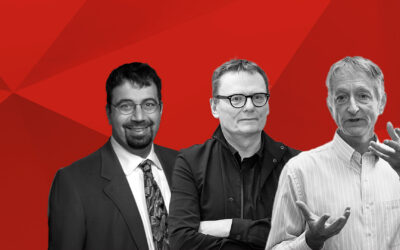
Trois lauréats du prix Nobel 2024 parmi la communauté de recherche acclamée du CIFAR
Le CIFAR célèbre l’annonce de deux nouveaux lauréats du prix Nobel associés à la feuille de route exceptionnelle...
15 octobre 2024
Annonce
Geoffrey Hinton, membre de longue date du CIFAR, reçoit le prix Nobel de physique 2024
Cette reconnaissance couronne des décennies de recherche visionnaire, dont le Canada a bénéficié grâce au soutien p...
08 octobre 2024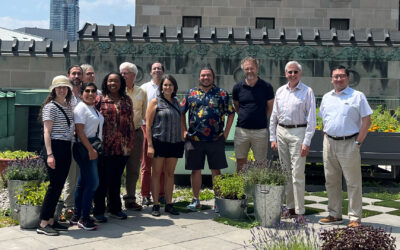
Nouvelles
Le CIFAR lance une nouvelle exploration sur « L’avenir de l’alimentation »
Un groupe de spécialistes oriente un exercice de prospective avancée sur les défis et possibilités que l’avenir po...
04 septembre 2024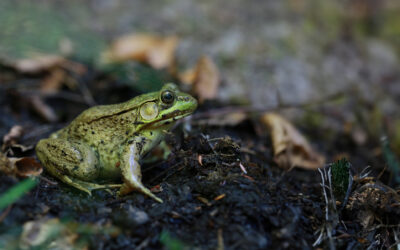
Nouvelles
Des scientifiques du CIFAR découvrent un traitement potentiel contre un organisme fongique qui décime les populations d’amphibiens à l’échelle mondiale
À travers le monde, un organisme fongique dévastateur se propage parmi les grenouilles et les crap
21 août 2024